Your face is talking, even when you are not. Beneath the surface of the skin sit 43 muscles, and in combination they can produce around 10,000 different expressions. Some of these movements are deliberate. Many are not. They are triggered before you have had time to think, which is exactly why the face is such a reliable window into what someone is really feeling. It is also our primary communication channel. You can read a facial expression from around 40 feet (13 metres) away, often before you can hear a single word. And unlike the voice or the body, the face is universal. Wherever you travel in the world, people display the same expressions when they feel the same emotions.
How do we know these expressions are universal?
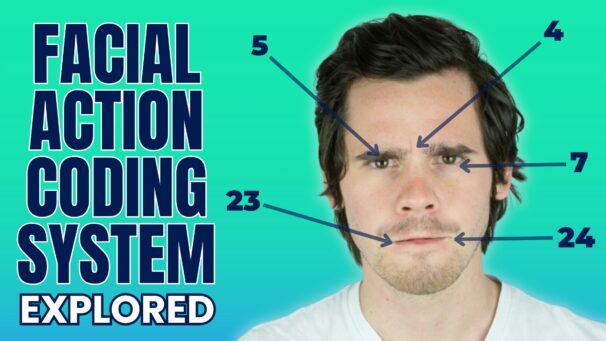
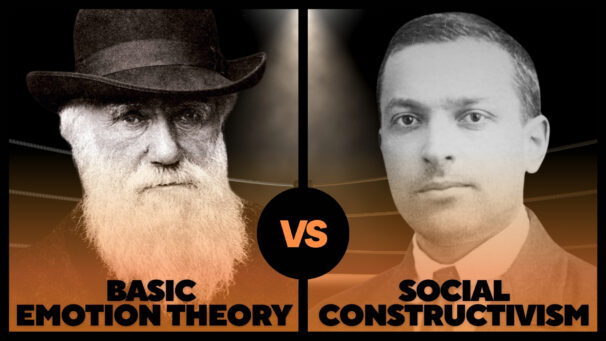
Charles Darwin proposed the idea back in the 1800s, noting that he saw the same expressions wherever he travelled. Anthropologist Margaret Mead disagreed, arguing that expressions were learned from parents and culture. Dr Paul Ekman initially sided with Mead, and set out to prove her right. Instead, his research across East and West found people showing the same expressions for the same emotions. Critics argued those participants had all learned their expressions from film and television, so Ekman went to the highlands of Papua New Guinea to study the Fore tribe, a people isolated from modern media. When he described emotional scenarios through a translator, such as “your child has died”, the expressions the tribe produced matched those seen everywhere else. Darwin was right, and this evidence underpins the Facial Action Coding System (FACS), the tool researchers use to measure every visible movement of the face.
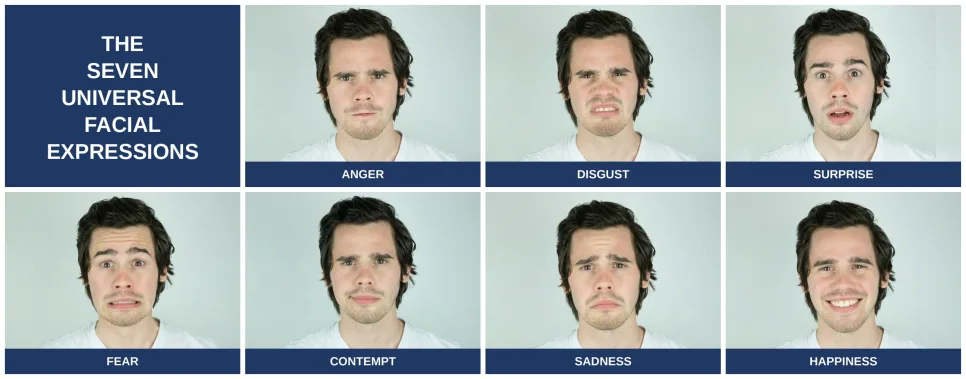
So what are the seven universal facial expressions? Let us take them one by one, along with the universal trigger behind each emotion and the key muscle movements to look for.
1. Anger
The universal trigger: goals being obstructed. When someone or something gets in the way of our goals, or compromises our principles or values, frustration builds and anger can follow. The display is designed to ward off the interference, and when the other person sees it and backs off, it can actually reduce the chance of a fight.
On the face, the brows are pulled down and together while the eyes stay open wide, and the lower eyelids tighten against the eyeball. That combination creates the unmistakable angry glare. The reliable indicator sits at the mouth: the red margins of the lips roll inwards, sometimes disappearing into the mouth entirely when the anger is intense. It is a hard movement to fake, which is what makes it so trustworthy as a signal.

2. Disgust
The universal trigger: something offensive. Often that is a smell or a taste, such as milk that has gone off, but it can just as easily be offensive behaviour or language from another person. The emotion serves a protective purpose. The upper lip rises to block off the nostrils, and there is often a closing of the throat, that “yuck” response, to stop anything harmful entering the body.
Look for the nose wrinkling, like a rabbit sniffing, paired with the upper lip lifting, often revealing the top teeth when the emotion is strong. The upper lip raise is the reliable muscle here, very difficult to produce convincingly unless you are actually feeling disgusted.

3. Surprise
The universal trigger: something sudden and unexpected. Surprise is the briefest of the seven emotions, lasting one or two seconds at most before it transitions into another emotion. Think of walking into a surprise birthday party. First comes surprise, then, if you like surprise parties, happiness follows.
The brows lift high and arch, the eyes widen to take in as much information as possible, and the jaw often drops. The whole display puts the body into an attentive state so we can work out what just happened. Do not confuse it with the startle reflex, which is faster, around a quarter of a second, and closes the face down rather than opening it up.

4. Fear
The universal trigger: a threat of harm, whether to our own wellbeing or to people we care about. The expression doubles as a long-range warning system, signalling to those around us that there is danger and they should beware too.
Like surprise, the brows lift, but in fear they are also squeezed inwards, flattening the eyebrows. This is a reliable muscle movement that is very hard to perform voluntarily, so when you see it, take it seriously. The eyes widen, and the mouth stretches horizontally, pulled back towards the ears by the risorius muscle on each side. Fear also comes with a freeze response, and blood is redirected to the major organs and away from the skin, which is why lighter-skinned faces can visibly pale when scared. There is a reason “petrified” means both terrified and turned to stone.

5. Contempt
The universal trigger: a feeling of moral superiority over another person, that smug sense of looking down your nose at someone who has breached your values. Contempt is unique in this set because it is the only unilateral expression. It appears on one side of the face only.
There are two common versions. In one, the buccinator muscle (the “trumpet muscle”) pulls the lip corner up and sideways towards the cheek, often creating a dimple on one side. In the other, the upper lip lifts on one side only, the classic Elvis Presley lip. Contempt is worth taking seriously in relationships. Where psychologist John Gottman saw contempt between couples discussing everyday irritations, he predicted the marriage would fail within five years, and around 80 percent of those marriages did.

6. Sadness
The universal trigger: loss, whether of a valued person or an important object. Sadness signals to others that we either need help or simply need to be left alone to recover.
Sadness is one of the hardest expressions to fake because it involves two sets of reliable muscles. The inner corners of the brows pull upwards and together, something only about one in ten of us can do deliberately, and the corners of the mouth pull downwards. When you see both appearing together, symmetrically, you can be confident the sadness is felt. Beware the performed version: a frown with pouted lips is what people typically produce when asked to act sad, and it involves neither of the reliable muscles.

7. Happiness
The universal trigger: pleasure, connection and things going well. And to cheer you up after sadness, here is the good news: happiness has its own reliable signal too, and it lives around the eyes, not the mouth. A genuine happy face combines the smiling mouth with a slight narrowing of the outer corners of the eyes. That narrowing is not a squint. It is the contraction of a ring of muscle around the eyeball that squeezes inwards when we feel real enjoyment, and it is very difficult to activate on demand. The mouth alone is easy. The eyes are the tell, and they matter so much that they deserve their own section.

The genuine smile: how to tell real happiness from a social smile
The smile is the most frequently faked expression on the human face. We smile to be polite, to reassure, to mask discomfort and to grease the wheels of social life. There is nothing wrong with that. But if you want to know whether someone is actually feeling enjoyment, you need to know the difference between a social smile and a genuine one, often called the Duchenne smile after the French anatomist who first described it.
A social smile uses the zygomatic major, the muscle that pulls the lip corners up towards the ears. Almost anyone can fire this muscle at will, which is why the mouth is the least trustworthy part of a smile. A genuine smile adds the orbicularis oculi, the donut-shaped muscle that circles each eye. When real enjoyment is felt, this muscle contracts, raising the cheeks, narrowing the eyes slightly and gathering little crow’s feet lines at the outer corners. Most of us cannot contract the outer band of this muscle deliberately. That is what makes it a reliable indicator, and it is coded in FACS as Action Unit 6, combining with the Action Unit 12 lip corner pull.
There are three more markers worth checking alongside the eyes. First, duration. Research by Paul Ekman and Mark Frank found that felt expressions typically sit on the face for between half a second and four and a half seconds, so a smile that flashes on and off instantly, or sits frozen for ten seconds, deserves scepticism. Second, symmetry. Genuine expressions fire through a pair of cranial nerves simultaneously, so both sides of the face should move together. Third, smoothness and synchrony. A felt smile has a smooth onset and a smooth offset, with mouth and eyes moving as one. A sudden switch-on, a sudden switch-off, or a mouth that smiles before the eyes catch up all suggest a performance.
One caution before you go smile-spotting. Crow’s feet alone are not proof of genuine enjoyment, because a very broad social smile can push the cheeks up high enough to crease the eyes. The differences are subtle, and that is exactly why training your eye on real examples matters.

A final word: never read the face in isolation
The face is the primary channel, but it is only one of several. Focusing on a single channel narrows your view completely. A raised lip or a flash of fear tells you an emotion has occurred, not why it occurred. Before drawing conclusions, weigh the expression against the person’s baseline, the context and what you are hearing in their words, voice and body. An expression that contradicts the story is an anomaly worth exploring with good questions, not a verdict.
And a word of warning if you plan to practise these expressions in the mirror: the wiring between face and emotion runs in both directions. Hold an anger face long enough and you may start to feel it. Shake it off afterwards, and finish with a genuine smile. Your eyes will know if you mean it.

The face is only one of six channels
Everything in this article comes from just one channel of communication. There are five more: the body, the voice, verbal style, verbal content and psychophysiology. When you can read all six together, you stop guessing what people feel and start seeing it. Our Read Anyone course teaches you the complete system, built on the same science you have just read about.