Proud to become a certified Coder.
“I’m thrilled I’m certified as a SCAnS™ coder and would do it all again if I needed to.”
Sophie’s full review covers both the value and the challenges of the 2023 pilot programme.
Read her full, candid review →Early bird 25% off EI2027 Book now →
Go beyond a gut feeling. Learn to analyse behaviour across six channels, document your reasoning, and earn an assessed professional credential.
Communication channels
Behaviour coding references
Independently assessed cases
Personal faculty coaching hour
A candidate’s answer changes. A witness hesitates. A colleague goes quiet. The useful question is what you noticed, what might explain it, and what to ask next.
SCAnS, the Six Channel Analysis System, gives you a structured way to explore those moments. Here, coding means recording behaviour, not programming. The Coder Certification takes that further: precise observations, competing explanations and a report another professional can follow.
Body language is only part of the picture. Learn to consider what you see and hear against the person’s account, their baseline and the context.
Select a channel to look closer
Changes in facial activity may catch your attention. Record what happened and when, then consider whether the account, baseline or context explains it.
Ask: does this differ from how this person usually responds in this context?
Consider posture, gestures and movement alongside the conversation. Discomfort, habit, environment and the question itself can all affect what you observe.
Ask: what else in this situation could explain the movement?
Attend to changes in pace, pitch, volume and pauses. Compare with the person’s ordinary delivery and the demands of the question, rather than assuming a pause means deception.
Ask: is this a change in delivery, or simply time to think?
Look carefully at what was actually said: the detail, the sequence and the answer to the question. Distinguish describing a particular event from describing what someone usually does.
Ask: which part of this account needs a clearer follow-up?
Consider how the conversation changes: responses, interruptions, engagement and attempts to clarify. Your question and manner also influence the person in front of you.
Ask: how might my approach be affecting this response?
Consider observable or measurable bodily changes, such as breathing or skin colour, within the limits of the footage or equipment. Arousal alone does not establish its cause.
Ask: what can I actually observe, and what am I only assuming?
Three observations. Two or more channels. A seven-second window. Follow this illustrative workplace example: will the team be ready for launch?
You’re managing a project. In a meeting, you ask your marketing team:
“Will you be ready for the launch date?”
One team member responds. Over the next few seconds, you notice three Points of Interest across their face, voice and words.
Their eyelids briefly raise and the corners of their lips draw back towards their ears.
Could this be fear? It is a possibility to explore, not something the expression alone establishes.
Record the movement first. Keep its possible meaning separate.
“Yeah.”
They answer at a noticeably lower volume — about 40% quieter in this illustrative scenario than when speaking earlier in the meeting.
Could that reflect a lack of confidence? Or is there another reason for the change?
“Should be.”
They add a qualifier rather than an unqualified commitment to the date.
A brief facial change. A quieter “Yeah.” A qualified “Should be.” Together, within this seven-second example, they form a cluster worth exploring.
Significant enough to ask about. Not enough to decide what it means.
Before deciding they will miss the deadline, hold competing hypotheses:
Check the account, their usual behaviour and the meeting context. More than one explanation may fit.
Use neutral follow-up questions to explore the possibilities:
“Talk me through what’s left to do before launch.”
“Which launch date are you working towards?”
“What, if anything, could get in the way?”
If the meeting itself may be affecting their response, offer a quieter one-to-one conversation. Listen to the answer and check it against the project plan and other evidence.
It helps you decide where to ask better questions. The follow-up and corroboration help you find the meaning.

Illustrative scenario, not a recording or diagnosis. The 40% volume change is part of the example, not a SCAnS threshold. No single behaviour or cluster proves an emotion, intention or deception.
A professional report needs more than a list of behaviours. The coding template asks you to separate what happened from what it might mean.
Explore this illustrative interview note. The discipline is in considering alternatives before deciding what needs checking.
Asked why they left their previous role, the candidate paused, repeated the question and gave a shorter answer than before.
The response changed. The reason is not established. Ask the candidate to talk through the circumstances of leaving, then check relevant details appropriately.
Built for professionals who need to document observations, ask better questions and explain the basis of their assessment.
For investigators, intelligence analysts and fraud teams working with interviews and recorded material.
For HR, employee relations and recruitment professionals who need a transparent record of their reasoning.
For legal, security, negotiation and consultancy professionals whose work depends on careful questioning.
Looking for a self-paced introduction? Explore SCAnS Online. Want to teach the method? Coder is a step towards the separate Train the Trainer pathway.
Case footage. Coding demonstrations. Conversations with the people who teach the method.
Watch closely. Have a go. Talk it through. Practise with the faculty, compare your working and use the feedback on the next case.
10:00–16:00 GMT · Both days · Join online
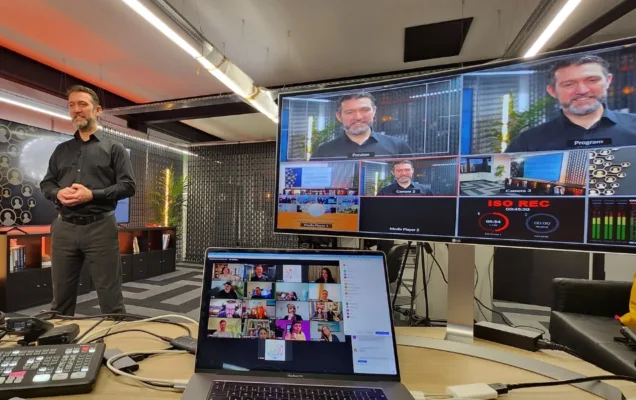
Delivered from the EmotionIntell Studio in Salford, with case footage, coding demonstrations and breakout exercises.
View everything included →Complete the included SCAnS Online foundation before the live workshop. Start with the six channels, 27 Points of Interest and the account, baseline and context.
Already studied SCAnS? Ask the team whether your prior learning meets the prerequisite.
Complete four real-case video analyses independently, with coding sheets and balanced conclusions. The programme outline allows up to two months for submission.
You are assessed on observation, alternative explanations and a balanced written conclusion.
*Assessment scores, not claims of lie-detection accuracy. The assessment brief sets the full marking and submission requirements.
Bring your observations, your uncertainty and your questions. The live workshop is led by Dr Cliff Lansley and Aaron Garner.
Behaviour analyst, educator and co-author of the published multi-channel analysis research. Known for his work on Faking It: Tears of a Crime.
Read Cliff’s background →
Behaviour analysis educator and MSc programme leader, with experience delivering training for military, intelligence, security and commercial teams.
Read Aaron’s background →The multi-channel approach is described in peer-reviewed research. That is a reason to examine the method carefully, not a promise that any cue proves a lie.
In a testimonial supplied to EmotionIntell, barrister Thomas Lamplugh Ballantine-Dykes describes Cliff’s report being submitted in a judicial-review case and highlighted by the judge. This is an account of consultancy work, not a guarantee of the credential’s acceptance by a court.
Certification does not itself make someone an expert witness. Suitability depends on wider expertise and the requirements of the particular case.
Personal reflections on learning to observe, question and explain.
“I’m thrilled I’m certified as a SCAnS™ coder and would do it all again if I needed to.”
Sophie’s full review covers both the value and the challenges of the 2023 pilot programme.
Read her full, candid review →“I used to write ‘seemed evasive’ and leave it there. Now I record exactly what changed, when, and what else could explain it. My reports are shorter, clearer and far easier to defend.”
“The biggest change wasn’t spotting more — it was asking better follow-up questions. The four assessed cases were hard work, but the feedback from Aaron made every one of them count.”
Book your place on the November cohort. Get the practical skills, supported practice and assessment in one programme.
£1,800 including UK VAT at 20%
One programme. Foundation, live workshop, assessment and coaching included.
Allow time for the foundation, both live days and around 20–30 hours of assessed work. Ask us to confirm your cohort’s access, cancellation and reassessment terms.
Read EmotionIntell’s terms →Ask about a private cohort for your organisation.
Still weighing it up? Tell us what you want to do with the training.
Observe carefully. Keep your mind open. Show your working.
Not sure where to start?
Whether it’s your first course, a team programme or postgraduate study, we’ll help you find the right fit.