SCAnS - Six Channel Analysis System
Six Channel Analysis System (SCAnS) is a scientifically supported Behaviour Analysis System pioneered by EIA Group (2008), designed to capture real-time Behavioural Data across the six communication channels of:
- Voice
- Psychophysiology
- Facial Expressions
- Body Language
- Verbal Style
- Verbal Content
****INSERT SCAnR HEXAGON IMAGE****
SCAnR
SCAnS is an extension of Six Channel Analysis in Realtime (SCAnR).
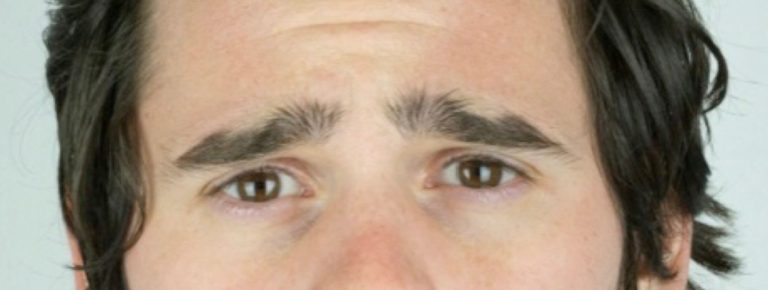
As you can see, facial expressions are only one of the six channels of communication in SCAnS and SCAnR. In SCAnR the main objective is to look for where someone’s behaviors deviate from their baseline. Usually this is done through observing and noticing their account which is what they’re saying or the story that they’re telling, also observing and noticing their baseline, and then considering the context, e.g., considering ‘Is their behavior appropriate for this context?’. If you observe occurrences where someone’s behavior is inconsistent, either in their account or their baseline, or in consideration of the context, then these are marked as PIns (Points of Interest) by trained SCAnR coders. These Points of Interest are not proof that someone is lying, they are simply areas to look into more, areas to question more, or simply to make note of.
When analyzing someone’s credibility, it is best to look for clusters. The term cluster refers to three or more Pins across two or more channels within seven seconds of a stimulus (such as when a question is asked).
Therefore, the best way to find the truth and catch a lie is by looking at all six channels and not only facial expressions, and being aware of someone’s baseline and how the context can influence the interaction and facial expressions that you see. This will help you to collect more information and be able to interpret the messages and emotions communicated with more accuracy.
Currently SCAnR is exploring how technology can be used to pick up skin colour changes and movement/micro expressions that the human eye may not pick up (including a pulse) through pixel movement/colour changes.
However, using technology to analyze facial expressions is quite complicated. As with the concerns surrounding the use of a polygraph to detect deceit, many deception cues are simply signs of arousal and can be explained by many factors. Additionally, the use of technology might cause someone to change their behaviors if they know they are being measured, and this could distort results and our capacity to see the truth.
This becomes particularly problematic when we use these tools in real-world analysis because of the ethical and practical aspects of using covert technology to analyse emotion and facial expressions.
Areas like police, military personnel, security professionals, negotiators, medics, purchasers, and social work may have limits as to the tools they can use to read body language and analyse credibility (such as ethics, protocols, legislation, etc.).
This makes it even more important for us to have an accurate and high-quality understanding of facial expressions and systems like SCAnS and tools like SCAnR, so that we can read people and get to the truth in the real world in real-time.