
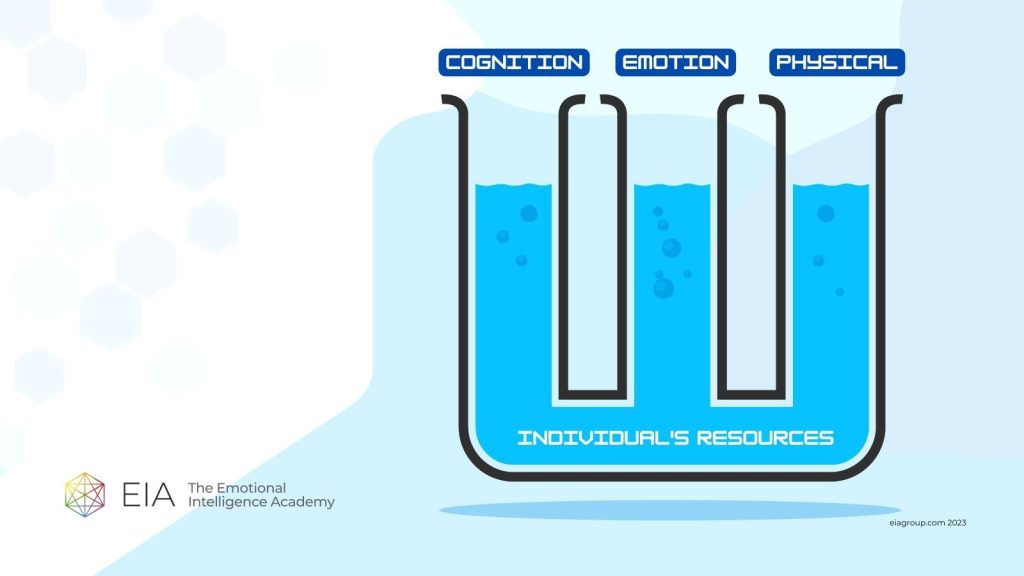
The competition for physical and mental resources is a formidable challenge that humans face, and it becomes even more complex when strong emotions take control of our thinking and physical abilities. Our overall capacity is limited across the three human domains of emotion, cognition, and physicality. This is illustrated in the “CEP (Cognitive, Emotion, Physical) Triad Model” below.
The CEP Triad Model
Under normal circumstances, many of us can balance our feelings, thoughts, and physicality. However, suppose we are in the grip of a powerful emotion. In that case, this emotional load can affect our capacity to reason and think clearly, and also our management of our behaviour and physicality. This is an evolved phenomenon as emotions are designed to help us survive, thrive, and not allow thinking to get in the way.
Similarly, cognitive load can affect our capacity to be aware of and manage our emotions and the constructive management of our physicality. We may notice this when we are walking and receive a challenging phone call that needs us to think hard. Our walking pace may slow down, or we may even stop walking altogether.
Cognitive Load Vs. Emotion and Physicality
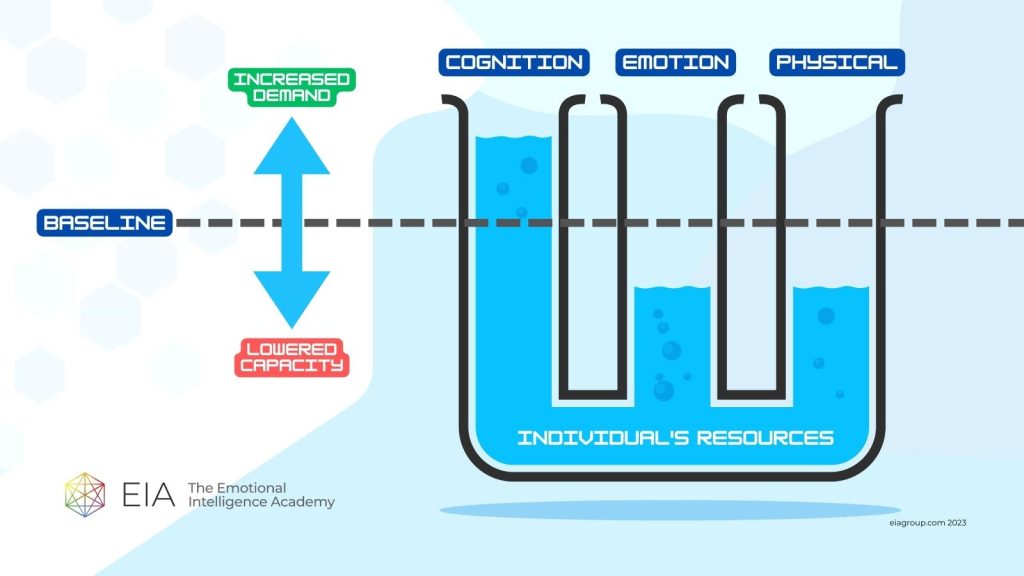
To handle competing demands, we must increase our competencies in one or more of the domains. The research suggests that emotional intelligence development is the best place to focus our resources as emotions trump cognition every time. As neuroscientist Joseph LeDoux states,
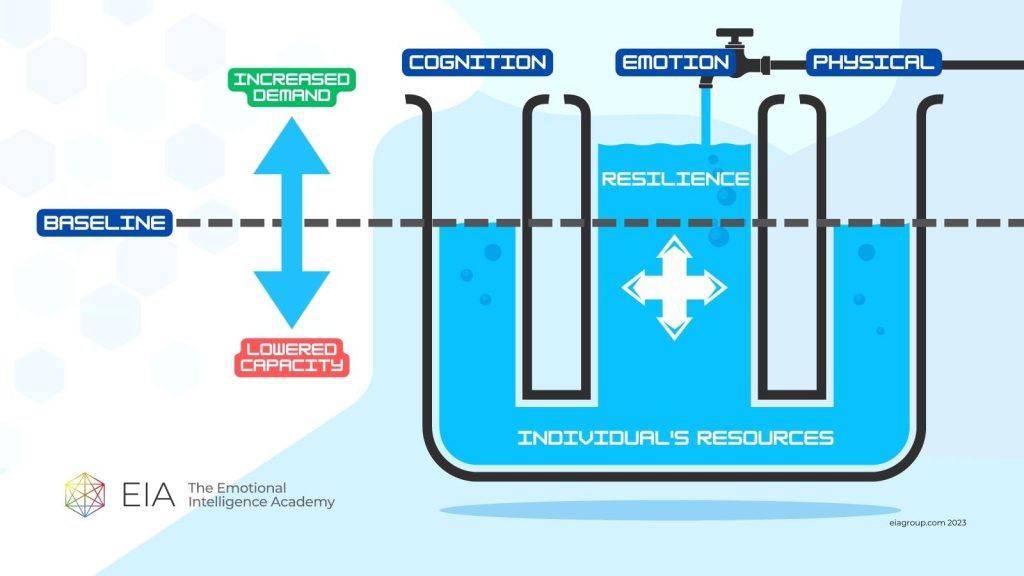
Developing our emotional intelligence can create the reserves and capacity to be more resilient against the challenges in life that draw hard on our resources. This enables an ability to monitor, use, and deploy our emotions constructively so they can be used to serve us against any competing demands from the other two domains. For example, it can help us recognise and deal with the emotions of those around us, even when we’re physically challenged with a task. It can also help us manage our emotions constructively so we don’t get overwhelmed by them.
Building Emotional Resilience
To illustrate, we can broaden and ‘over-fill’ the emotional tube, creating emotional resilience. This enables us to reflect on and develop our emotional intelligence capabilities and, in turn, handle the day-to-day cognitive, emotional, and physical challenges of life and work effectively.
In Conclusion
While the competition for resources between our emotions, physicality, and cognition is formidable, it is not insurmountable. By understanding the complexities of this dynamic, we can develop the skills needed to navigate these challenges skilfully and lead a more balanced, fulfilling life.